
Rover 8 hp
Rover's first production car used its engine and transmission as the middle of an unusual backbone instead of sitting them on a normal ladder frame.
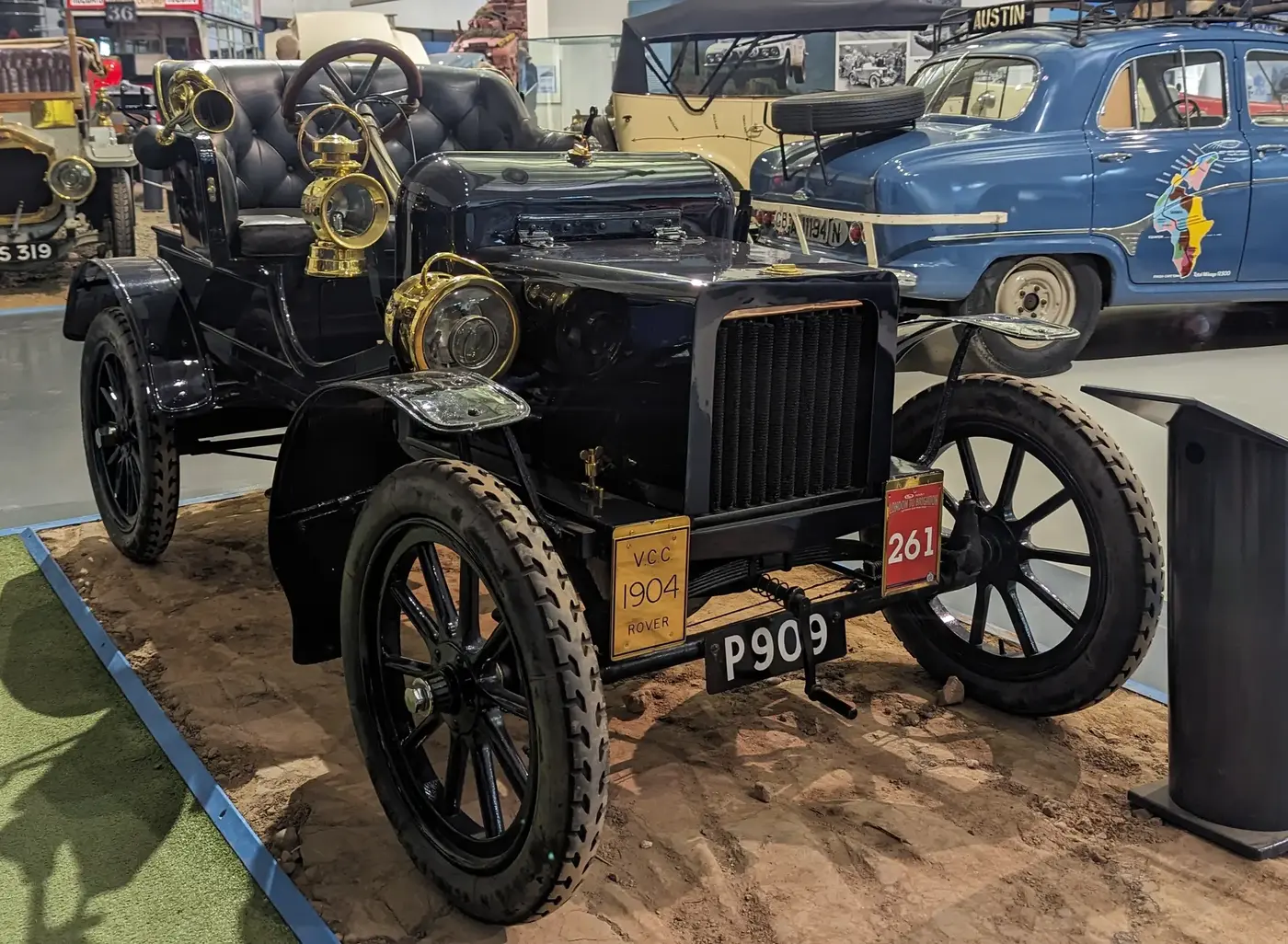
1904 Rover 8 hp at the British Motor Museum · Calreyn88 · CC BY-SA 4.0
What did this one sell for?
Make a guess, then reveal one identity-matched completed auction result. It is a comparison point, not a price promise.
Reveal the auction result
Based on a completed sale at Brightwells, an estimated value for this vehicle is £106,512.
Why this sale: Exact 1904 British Rover 8 hp single-cylinder two-seat car with early wire-and-bobbin steering; the auction identifies registration BVV 2 as a 1904 example rather than a later rack-and-pinion car. Brightwells described BVV 2 as outstandingly original and the oldest surviving Rover in private ownership. Its bonnet and carburettor were replaced after post-war recovery, original-type bearings were sourced, it was mechanically restored in 2007, and it was subsequently maintained and used on veteran-car events. Twenty-two years of vendor ownership and extensive dating/provenance records are material value-positive differences.
Brightwells labels £106,512 as the hammer price including buyer's premium. The lot page states a 12% buyer's premium excluding VAT, with a £150 minimum; VAT on the premium, taxes, transport and later work are excluded from this comparable unless already included in the displayed result. One auction result is a reference, not an appraisal; condition, history, options, location and market timing can change value. Accepted as an exact year, model, steering type and body-scope completed sale. Exceptional survivor status, public-event history and provenance make this a special comparable rather than a generic 8 hp value.
More than a set of wheels.
Rover was already known for bicycles and motorcycles when designer Edmund Lewis created its first production car in Coventry. This profile follows the earliest 1904 8 hp two-seater, not the completely different twin-cylinder Rover Eight introduced after the First World War.
Look a little closer.
The oldest surviving Rover 8 hp still takes part in the London to Brighton Veteran Car Run.
Photos show an example of the model or generation. The pictured vehicle’s year, equipment, or modifications can differ from the specification described here.
A chassis that was really a spine
Most early cars carried their machinery on two long frame rails. Edmund Lewis instead joined the engine, gearbox, propshaft housing and rear axle into a central backbone. It was stiff and light, but the museum notes that it offered little side-impact protection.
Source: British Motor Museum · 1904 Rover 8 hp ↗A tiny car for a very big journey
The original Rover 8 stayed in production until 1912. Robert Jefferson and Robert Weallas drove one from Coventry to Istanbul, an extraordinary cross-Europe trip when roads, fuel stops and repair shops were still scarce.
Source: Rover 8 Register · History of the Rover 8 ↗Where these facts come from
Selected facts checked for this edition. Some source pages link to broader model families. Last reviewed September 30, 2026.